

A Historic Move for National Security
On February 23, 2026, the Union Ministry of Home Affairs (MHA) officially launched India’s very first comprehensive anti-terror policy. It is called PRAHAAR, which translates to “Strike.”
For decades, India has relied on various separate laws and local police efforts to handle national security. Now, PRAHAAR brings everything together into one unified playbook. The biggest change? It shifts the country’s approach from simply reacting to attacks to actively tracking and preventing them before they happen
Why Do We Need a New Policy Now?
The world has changed rapidly, and so have the methods used by bad actors. The PRAHAAR policy recognizes that modern threats are no longer just physical attacks coming across the border. Today’s dangers include:
Digital & Cyber Threats: Coordinated cyber-attacks by international hackers targeting our power grids, railways, and internet infrastructure.
High-Tech Gadgets: The growing misuse of drones to drop weapons, drugs, or illegal funds across borders.
Online Brainwashing: Global extremist groups (like ISIS and Al-Qaeda) using social media and secret messaging apps to manipulate youth and create hidden “sleeper cells.”
Hidden Money Trails: The use of the “dark web” and cryptocurrency to secretly fund illegal activities.
The 7 Pillars of PRAHAAR
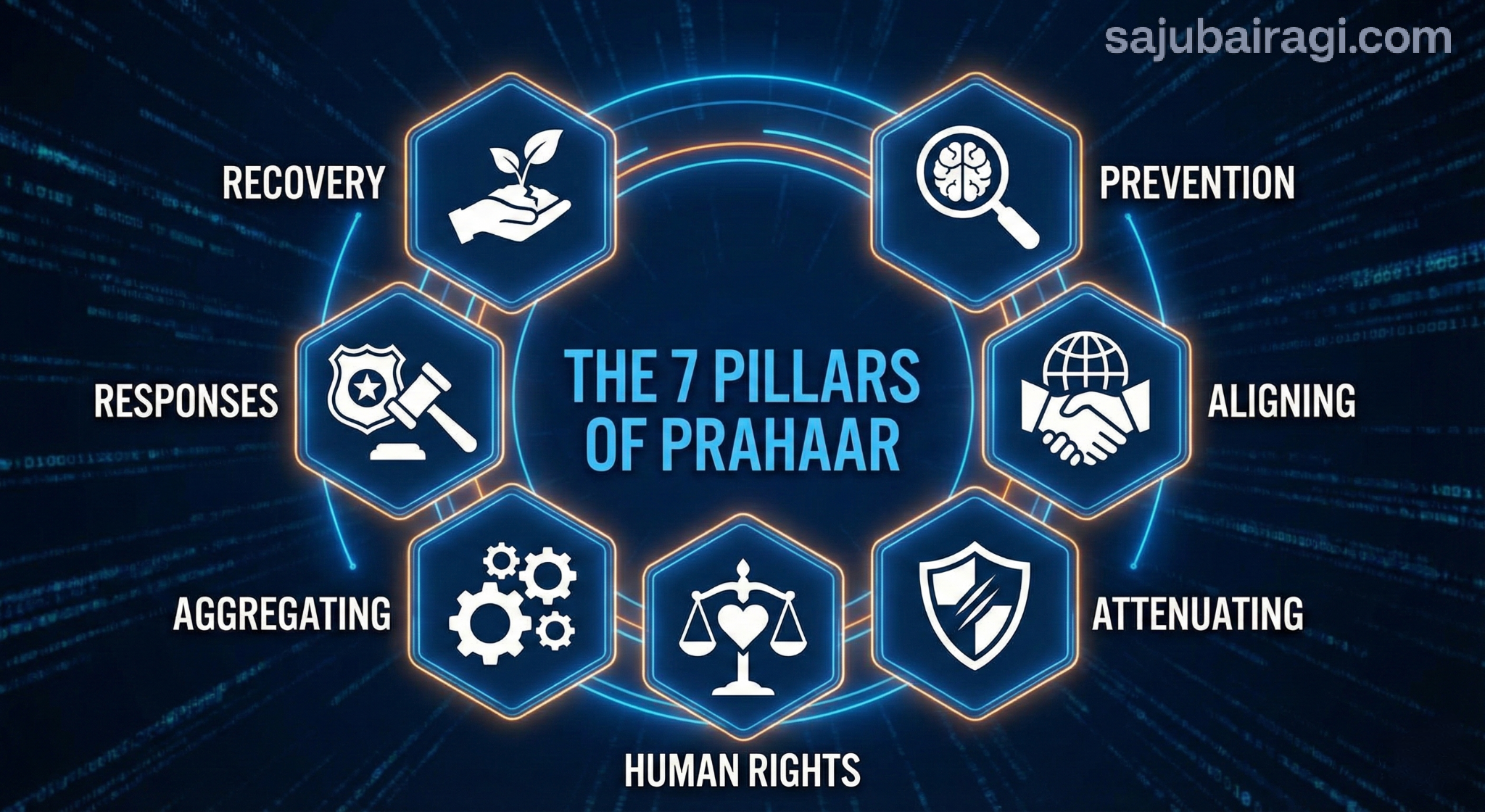
The name “PRAHAAR” isn’t just a strong word; it is actually an acronym representing the seven main goals of this new strategy:
Prevention: Focusing heavily on gathering smart intelligence to stop threats before they materialize.
Responses: Ensuring security forces act swiftly and accurately when a danger arises.
Aggregating: Bringing all state police and central government agencies together to work as one seamless team.
Human Rights: Guaranteeing that all security actions strictly follow the law and respect basic human rights.
Attenuating: Weakening the root causes of violence, such as online radicalization and fake propaganda.
Aligning: Joining hands with friendly countries around the world to crush international crime networks.
Recovery: Helping local communities bounce back quickly and stay strong after any security scares.

Well initiative
Thanks For Your Comment.